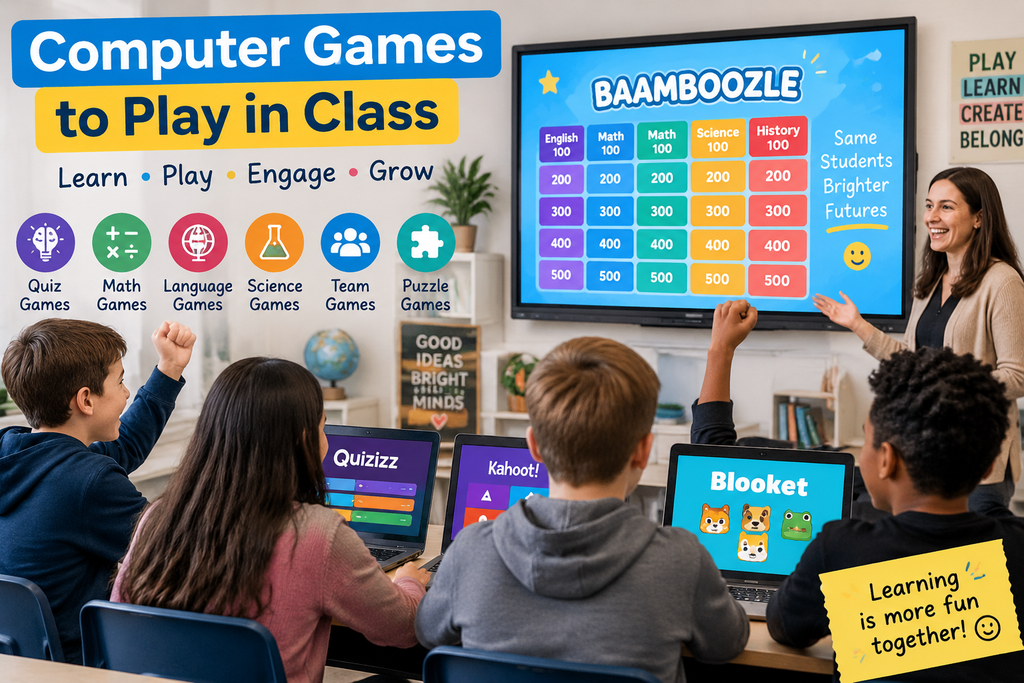
Classrooms are changing with the growth of digital technology. Teachers are no longer limited to textbooks, worksheets, and traditional activities. Today, many educators use computer games to play in class as a way to make lessons more interactive, exciting, and engaging for students. Educational computer games combine learning with entertainment, helping students develop skills while enjoying the learning process. Research on educational games shows that game-based learning can support motivation, problem-solving, and student engagement when used with clear learning goals.
Computer games in classrooms are not only about entertainment. When selected carefully, they can help students practice important concepts, improve teamwork, develop creativity, and understand difficult topics in a more enjoyable way.
Why Use Computer Games in the Classroom?
Many students learn better when they actively participate. Listening to a lecture or reading information can sometimes become difficult for students who need more interactive experiences. Computer games provide a different learning approach by allowing students to solve problems, answer questions, and explore new ideas.
Game-based learning creates an environment where students feel motivated to participate. Instead of worrying about making mistakes, they can experiment, try different solutions, and learn from the experience.
Teachers can use computer games as warm-up activities, lesson introductions, revision tools, or rewards after completing classroom tasks. Educational games can support subjects such as mathematics, science, languages, history, and computer skills.
Quiz Games for Classroom Learning
Quiz-based computer games are among the most popular choices for classrooms. These games allow teachers to create questions related to their lessons and let students compete individually or in teams.
Platforms similar to classroom quiz systems help teachers test student understanding while keeping lessons enjoyable. Students answer questions, earn points, and receive immediate feedback.
Quiz games are useful for revision before exams because they help students remember important information through repetition and active participation.
Baamboozle: Interactive Classroom Games
One popular example of educational game-based learning is Baamboozle, which allows teachers to create interactive quizzes and classroom challenges. Through baamboozle.net, educators can design activities where students answer questions, work in teams, and participate in friendly competitions.
Baamboozle is especially useful because teachers can use it from a single classroom screen. Students do not always need individual devices, making it practical for many classrooms.
Teachers can use Baamboozle games for vocabulary practice, science questions, mathematics revision, and many other subjects. The platform helps transform ordinary lessons into interactive learning experiences.
Puzzle and Problem-Solving Games
Puzzle games are another excellent option for classroom use. These games encourage students to think critically and develop problem-solving skills.
Logic puzzles, strategy challenges, and creative thinking games help students analyze situations and find solutions. These activities can improve concentration and encourage students to think independently.
Teachers can use puzzle games during computer classes, STEM lessons, or as group activities where students work together to solve challenges.
Language Learning Computer Games
Computer games are highly effective for language learning. Teachers can use vocabulary games, spelling challenges, grammar activities, and pronunciation exercises to help students improve their language skills.
Students often remember new words more easily when they learn through interactive activities instead of memorizing lists.
Language games can also encourage communication because students may need to discuss answers, describe ideas, or complete team challenges.
Mathematics Games for Students
Mathematics can sometimes feel challenging for students, but computer games can make it more enjoyable. Math-based games allow students to practice calculations, patterns, logic, and problem-solving in an interactive way.
Instead of completing repetitive exercises, students can solve mathematical challenges while playing. This approach can increase confidence and reduce fear of difficult topics.
Teachers can use mathematics games for different grade levels, from basic counting activities to advanced problem-solving challenges.
Science and Discovery Games
Science education can also benefit from computer games. Interactive science games allow students to explore concepts related to biology, physics, chemistry, and environmental studies.
Some games simulate experiments or provide virtual environments where students can investigate different ideas. These experiences help students understand concepts that may be difficult to explain through textbooks alone.
Science games encourage curiosity and help students connect classroom knowledge with real-world situations.
Team-Based Computer Games
Team-based games are valuable because they encourage collaboration. Students learn how to communicate, share ideas, and work together toward a common goal.
Teachers can divide students into groups and assign challenges that require teamwork. This creates a positive classroom environment where students learn from each other.
Team games also help quieter students participate because they can contribute within a supportive group.
Creative Games for Classroom Activities
Creative computer games allow students to design, build, and express their ideas. These games can include digital storytelling, coding activities, design challenges, and creative projects.
Creative games are especially useful for developing imagination and digital skills. They encourage students to become creators instead of only consumers of technology.
Benefits of Computer Games in Education
Using computer games in class provides many benefits. Students often show higher motivation when lessons include interactive activities. Games can improve memory, encourage teamwork, and make difficult concepts easier to understand.
For teachers, educational games provide another method to explain topics and evaluate student progress. They can also make classrooms more dynamic and enjoyable.
However, computer games should be used with balance. The main purpose should always be learning, not only entertainment.
How Teachers Can Choose the Right Classroom Games
The best computer games for classrooms are those connected to learning objectives. Teachers should choose games that match the students’ age, abilities, and lesson goals.
A good educational game should be easy to understand, encourage participation, and provide meaningful learning opportunities.
Teachers can combine games with discussions, assignments, and traditional teaching methods to create a complete learning experience.
Conclusion
Computer games to play in class provide teachers with creative ways to improve student engagement and make learning more enjoyable. From quiz games and puzzles to language activities and educational platforms like Baamboozle, digital games can transform classrooms into interactive learning environments.
When used correctly, computer games are not a distraction. They are powerful educational tools that help students develop knowledge, creativity, teamwork, and problem-solving skills. As technology continues to influence education, classroom games will continue to play an important role in modern teaching methods.

 using WordPress and
No responses yet